

Let’s be honest. Choosing the right piece of art for a space is about more than just picking something that looks good. The right artwork can elevate a room, change its energy, and create a visual anchor that draws people in. For interior designers, curators and art lovers with an eye for fine photography, the process should be both instinctive and informed.
In this guide, I’ll walk through exactly how to approach artwork selection using real examples from my International Print Series and Limited Editions. Whether you’re styling a modern home, a high-end commercial space or looking for a signature piece that tells a story, this is how to choose photography that doesn’t just fill a wall but enhances it.
1. Understand the Mood and Tone of the Space
Before diving into colours and frames, take a moment to consider the energy of the space itself. Is the room minimal and calming or dramatic and textured? Are you working with natural light or interior lighting? Is the goal to create contrast or blend in with existing tones?
The starting point is always observation. Take photos of the space from different angles. Note the dominant materials, the texture of the walls, and where your eye naturally rests when entering the room. These are all cues for where and how artwork can live.
Professional interior design articles often stress the importance of matching artwork to a room’s emotional function. According to House Digest, rooms that are meant to be calm or restful benefit from more open compositions and muted tones, while areas like studies or creative spaces can benefit from more energetic and complex visual textures.
Example:
Using a Smartist mockup, I recently visualised “Lumin” in a contemporary living room with soft neutrals and light timber finishes. The pale blues and whites of the print reflected the coastal tone of the space and added a feeling of stillness and breathability.
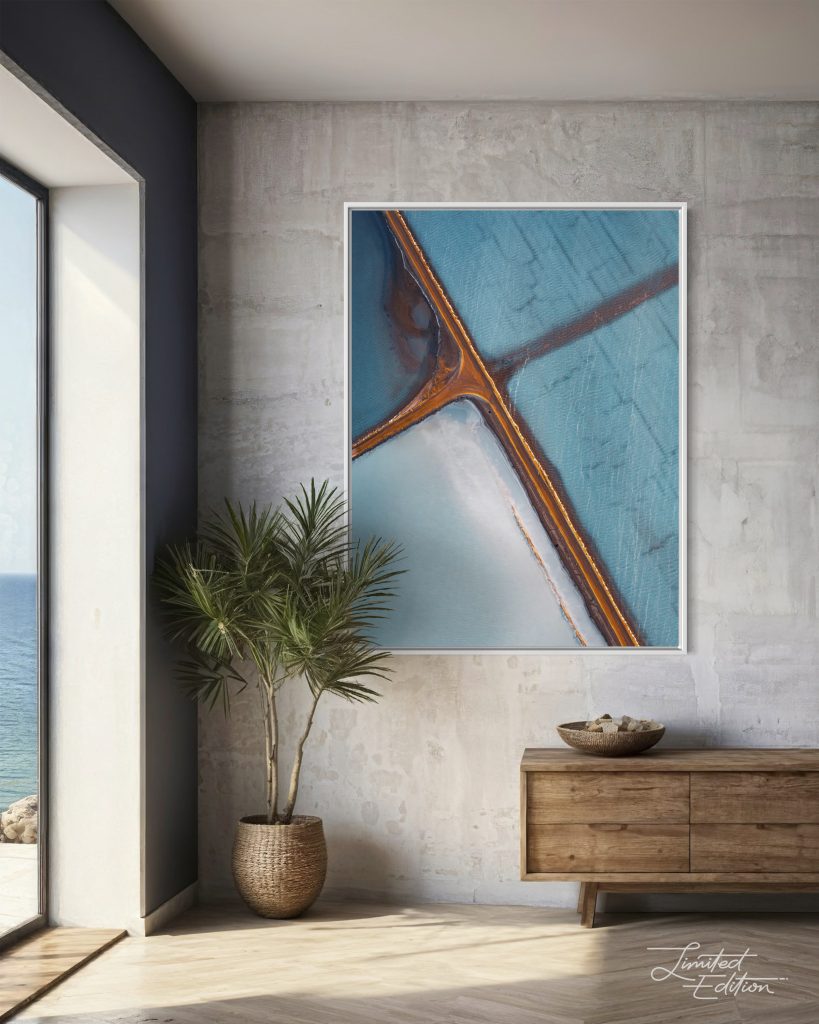
Explore the full collection by mood and colour here.
2. The Power of Aerial Photography in Interior Design
Aerial photography is an interior designer’s secret weapon. From above, landscapes turn into artful abstractions. Rivers become veins, salt lakes resemble brushstrokes, and coastlines cut through colour like canvas edges. These pieces often become the talking point of a space — and with good reason.
Aerial work bridges fine art and modern design sensibilities. It suits contemporary architecture, minimal interiors, rustic or industrial themes, and even more classical designs when paired thoughtfully. In many cases, the visual language of aerial photography — shapes, flow, rhythm — harmonises with architectural lines and layouts.
Example:
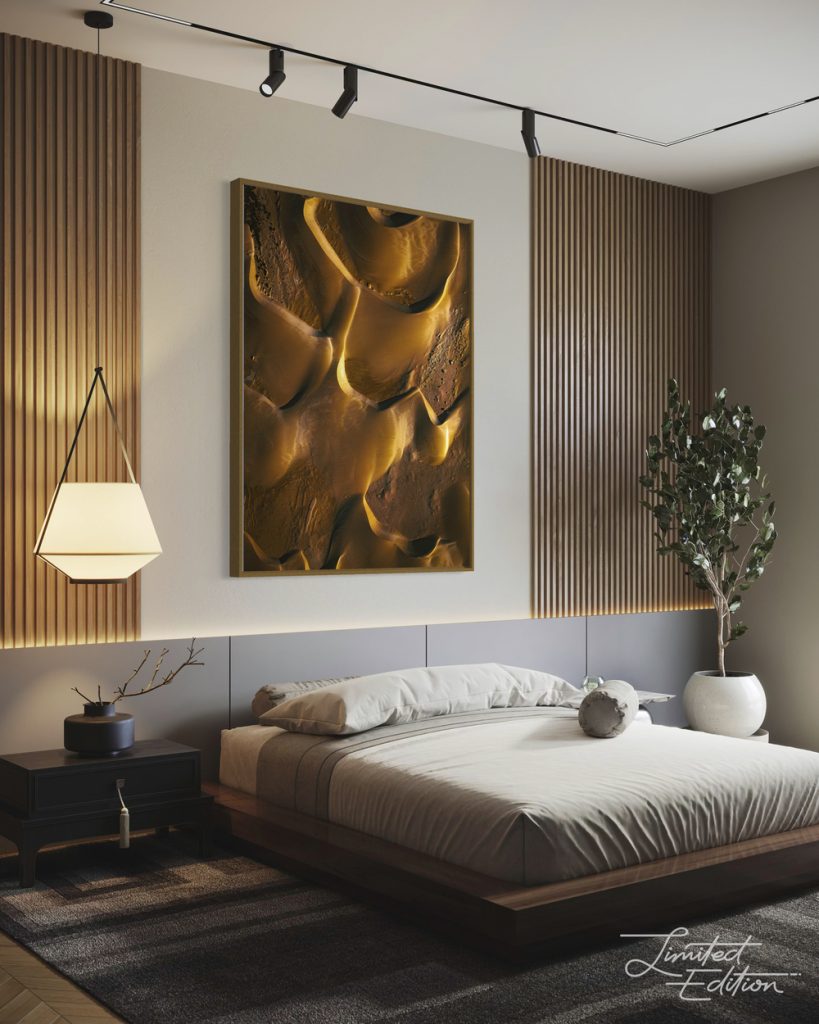
Using Smartist, I placed Polock into a modern penthouse. The fractured textures and bold painterly quality of the piece stood out against the dark vertical panelling, adding contrast while still feeling cohesive. It brought emotional weight and intrigue to the space without overpowering it.
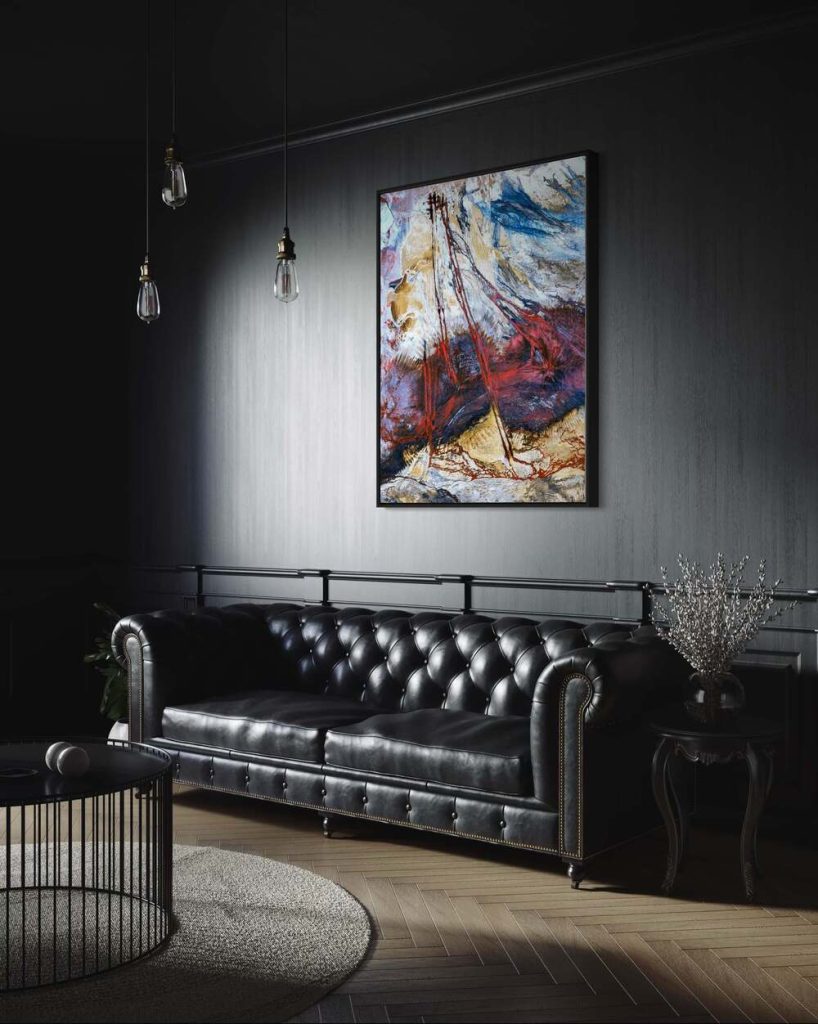
For curated commercial spaces or home galleries, these pieces often serve as emotional or visual anchors that add spatial depth and narrative intrigue.
Browse aerial abstracts here.
3. Match Art with Materials, Textures and Light
Great interior design is about coherence, not repetition. According to colour experts at Farrow & Ball, pairing colour and texture effectively involves echoing tones and materials subtly throughout a space, not necessarily matching them directly. Artwork should be selected with an understanding of how it interacts with flooring, walls, textiles and lighting.
Example:
In a Smartist mockup of Caves Road, the soft mists and tall Karri trees echoed the gentle vertical lines of the warm timber panelling. The earthy tones of the image complemented the natural materials in the space, creating a sense of calm and organic connection.
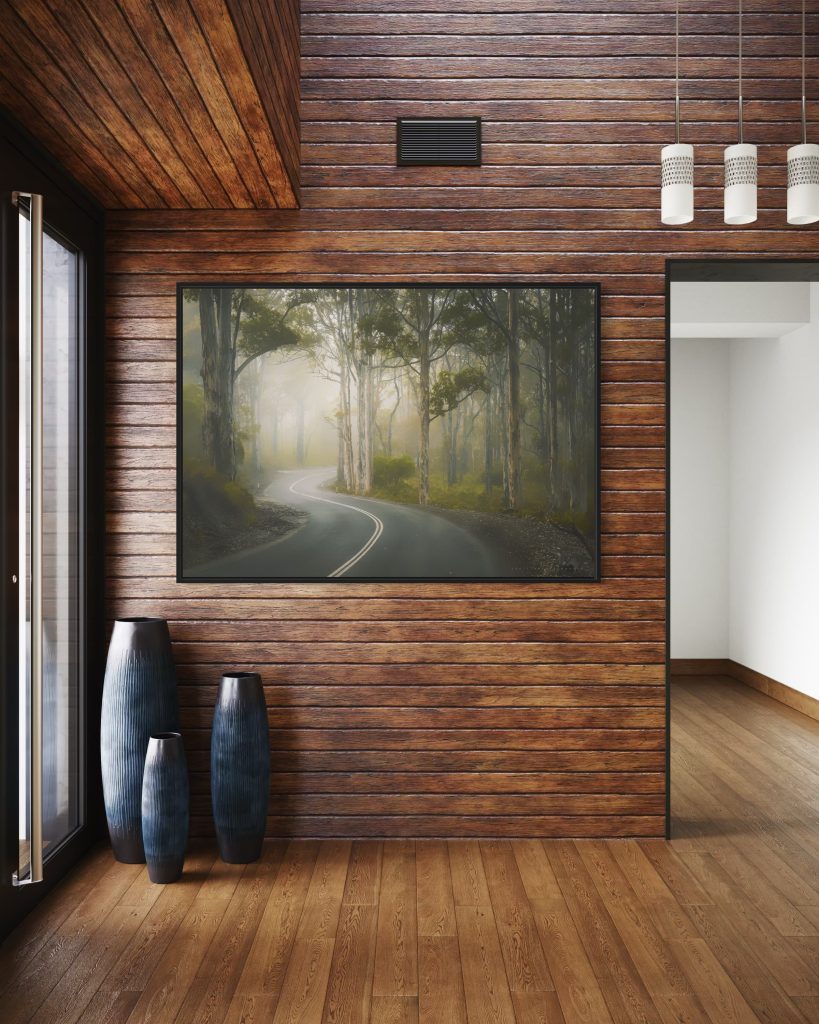
Also consider the direction and strength of light in the room. Soft prints work beautifully in naturally lit areas, while bold, high-contrast pieces like Mesa stand out in rooms with limited daylight.
4. Why Fine Art Prints Are Worth the Investment
Fine art prints are not only visual centrepieces but long-term investments in the quality and soul of a space. These are not off-the-shelf products. They are crafted using archival materials, made to last for generations.
My prints are produced on museum-grade Hahnemühle Photo Rag or Cotton Rag Ultra Smooth papers. These premium papers are designed for superior tonal depth, texture and longevity, with pigment-based inks offering exceptional colour stability. Unlike generic poster prints, these works hold up against time, light and air quality.
Each image represents hours of fieldwork, aerial scouting and post-production, often shot in remote parts of Australia and New Zealand that are difficult to access. That process becomes part of the print’s value.
Why it matters:
When you place one of these prints in a home, office or gallery, it becomes part of the space’s story. Clients and guests notice the difference, from detail and tone to the emotional response it evokes.
Explore current collections here.
5. Limited Editions for Serious Collectors
For those seeking rarity and exclusivity, I offer select works as Limited Editions in editions of only 20. These include Mesa, Lumin and Salis – each one signed, numbered and shipped with a certificate of authenticity.
Unlike open editions, these are never reprinted, making them ideal for collectors or high-end design projects where uniqueness matters.
Example:
The Limited Edition print Salis, captured over Shark Bay, has been chosen for spaces needing a restrained yet emotional aesthetic. Its textures and gentle transitions allow it to complement a variety of tones without overpowering the room.
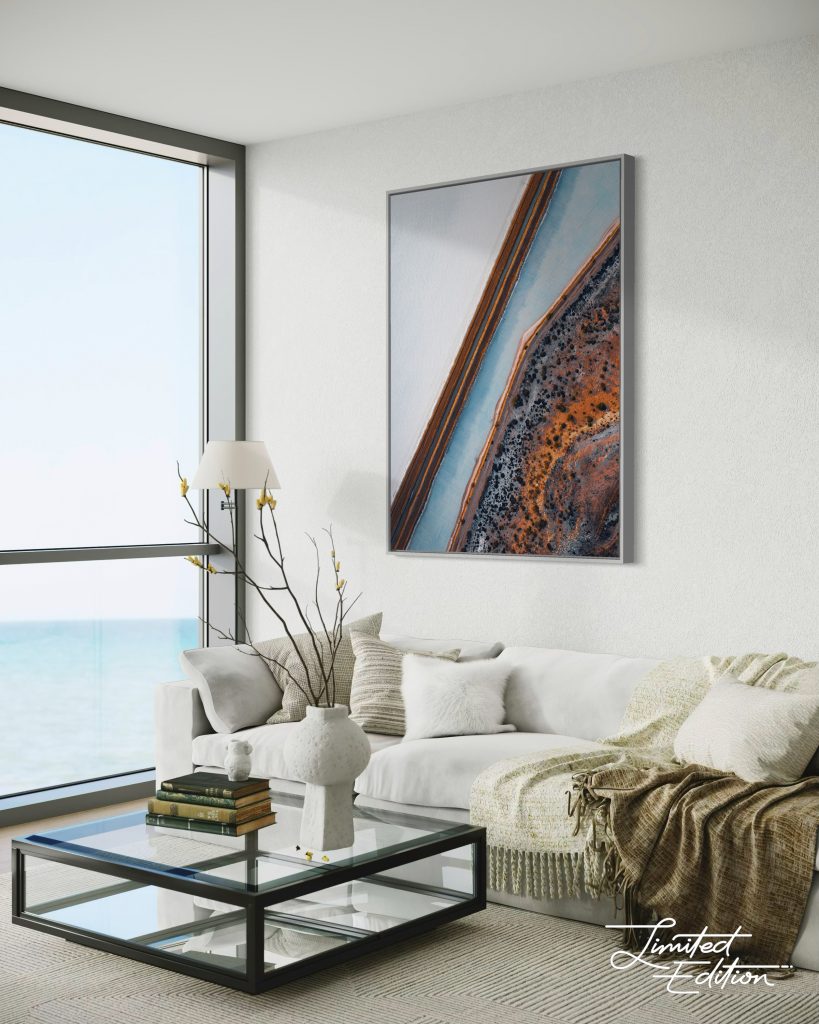
These pieces are ideal as focal points or conversation starters in premium spaces.
6. Resources for Designers and Clients
If you’re an interior designer, stylist or collector, I offer:
- Smartist mockups for visualising art in real spaces
- Custom sizing advice for feature walls or tight gaps
- Paper and framing guidance tailored to your design scheme
- Private consults via email or Zoom to curate artwork for projects
You can see how pieces look on your own wall before making a decision. Simply upload an image of your space and I’ll send through a visual.
Most of the pieces in my International Print Series are ready to order directly, but if you’re working on something unique, like a very specific crop, sizing variation, or a tailored framing setup, just reach out. I’m always happy to accommodate off-spec requests where possible and make sure the artwork fits your space perfectly.
Want to try it? Send an enquiry here and we’ll walk you through it
7. Curate by Emotion, Season or Story
Great design doesn’t just rely on balance or texture. It speaks to emotion. Art has the unique power to set the emotional temperature of a space. It can calm, invigorate, reflect or provoke. Curating artwork around emotional cues is one of the most effective ways to create impact.
Ask yourself, what is the story of this space? What do you want people to feel when they enter? This might sound conceptual, but it’s a cornerstone in both professional styling and visual storytelling. According to Elle Decor, people connect most deeply with rooms that feel curated, not styled.
Final Thoughts: Let the Art Do the Heavy Lifting
A thoughtfully chosen piece of art does more than complete a room. It sets the emotional baseline. It welcomes people in and becomes a quiet reflection of the individuals who live or work there. Great spaces don’t just look good, they feel right – and the art on the walls plays a significant part in that.
In my experience working with designers, collectors and homeowners, I’ve seen how the right photograph can shift a room’s entire dynamic. A well-placed aerial print can make a sparse space feel expansive, or add grounding presence to a room that feels too open. It can bring energy to a neutral palette or introduce subtle elegance to a bold one.
When you select artwork with intent – considering mood, material, lighting and space – it becomes part of the design language of the room. It anchors everything. It contributes to how people move, how they interact, and how they feel.
Whether you’re just starting to explore fine art prints or curating a high-end space, the best place to begin is with your intention. From there, we can work together to find something that elevates your project and resonates long after the room is finished.
You can:
- Browse the full collection
- View Limited Editions
- Request a Smartist mockup
- Book a one-on-one consultation to discuss your space, palette and goals
Choosing art should be personal, collaborative and inspiring. My goal is to make that journey as smooth and rewarding as possible. Thanks for taking the time to read this 🙂


